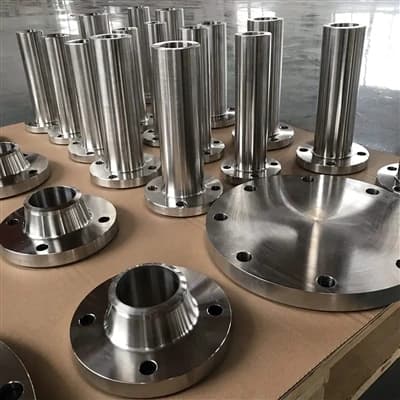
As a core component of high-pressure, highly corrosive pipeline connections in the oil industry, this batch of 900# Inconel 6600 nickel-chromium alloy welded neck flanges fully complies with ASME B16.5 and API 605 standards. ASME B16.5 and API 605 standards are widely recognized in the global oil and gas industry due to their stringent requirements for product performance and safety. The 900# pressure rating design enables the flanges to withstand extreme working pressures up to 15.5 MPa (2248 psi), perfectly suited to the high-pressure operating environment of US oil well pipelines and refinery fluid transport systems.
These welded neck flanges are made of high-quality Inconel 6600 (UNS N06600) nickel-chromium alloy, possessing excellent high-temperature resistance and corrosion resistance, which are crucial for the harsh environments of oilfield engineering. This alloy boasts a precise chemical composition, with 62.0-65.0% nickel (Ni), 19.0-22.0% chromium (Cr), and 27.0-30.0% iron (Fe), along with trace elements such as manganese and silicon to optimize overall performance. This unique material allows the flange to operate continuously at temperatures up to 1093°C (2000°F) without sacrificing structural integrity, while effectively resisting corrosive media such as hydrogen sulfide (H₂S), crude oil impurities, and high-salinity formation water-common challenges in oil exploration and refining.
In terms of mechanical properties, the 900# Inconel 6600 welded neck flange undergoes a rigorous heat treatment process, achieving a tensile strength ≥758 MPa, a yield strength ≥345 MPa, and an elongation ≥30% (tested according to ASTM E8 standard). These superior mechanical properties ensure that the flange can withstand long-term dynamic loads and vibrations during oil extraction and transportation, preventing leaks or structural failures, thereby preventing safety hazards and economic losses.
As a welded neck flange, this product features a seamless welded design, providing a tight connection to the pipeline and minimizing stress concentration at the joint. This improves the overall stability and sealing performance of the pipeline system-crucial for critical oil pipeline connections requiring zero leakage. Each flange in this batch undergoes rigorous quality inspection, including ultrasonic testing (UT), penetrant testing (PT), and material composition analysis (PMI) to verify the authenticity and purity of the materials, achieving a first-pass yield of 99.9%.