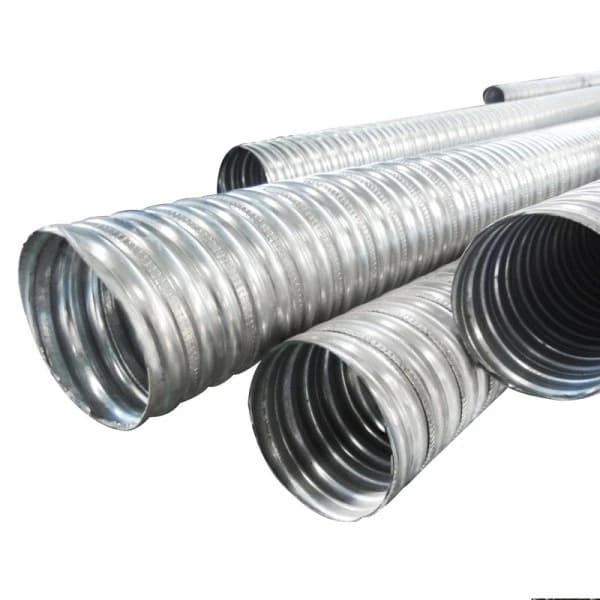
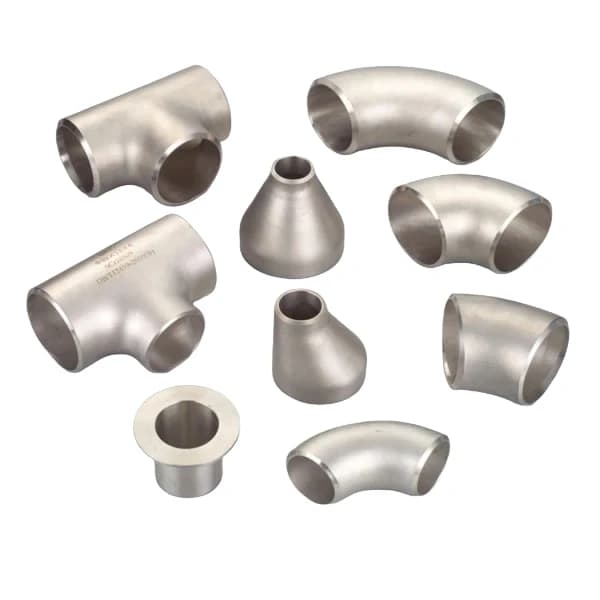
Wondering seamless vs welded pipe which is better for your project? This guide covers everything you need to know - from pipe manufacturing methods and mechanical properties to cost differences and applicable standards. Understanding the welded pipe vs seamless pipe difference is critical for making the right choice in oil and gas, chemical, construction, and power generation applications.
1. Introduction
One of the first decisions in any piping project is when to use seamless pipe vs welded pipe. The choice affects system cost, pressure rating, installation method, inspection requirements, and long-term reliability.
Seamless pipe is manufactured without a welded seam, while welded pipe is formed from steel plate or coil and joined along a longitudinal or spiral seam. Both have distinct advantages depending on the application.
This guide provides an unbiased, technically grounded comparison of seamless vs welded pipe to help engineers, procurement professionals, and project managers make the right selection.
2. What Is Seamless Pipe?
Seamless pipe is produced by piercing a solid steel billet and then rolling or drawing it into a hollow tube. Because there is no weld seam, the pipe has uniform wall thickness and metallurgical structure throughout. For a deeper dive into seamless pipe manufacturing, grades, and standards, see our dedicated guide: What Is Seamless Steel Pipe? Manufacturing, Standards & Buying Guide.
Manufacturing Process
Billet Heating - A solid cylindrical steel billet is heated to approximately 1200°C (2190°F).
Piercing - The billet is pierced by a mandrel in a rotary piercing mill to create a hollow shell.
Elongation - The hollow shell is elongated through a mandrel mill, plug mill, or continuous rolling mill to achieve the desired diameter and wall thickness.
Sizing & Straightening - The pipe is sized to final dimensions and straightened.
Heat Treatment - Normalizing, quenching, and tempering as required by the specification.
Testing - Hydrostatic, ultrasonic, eddy current, or other NDT methods per the applicable standard.
Size Range
Parameter Range Outer Diameter 1/8" to 36" (DN6 to DN900) Wall Thickness Sch 5S to Sch 160 Length Up to 12 meters (customizable)
Key Characteristics
No weld seam - eliminates the weld as a potential failure point
Uniform grain structure and mechanical properties
Higher pressure rating than welded pipe of the same grade and schedule
Better performance under cyclic loading and extreme temperatures
Higher cost due to more complex manufacturing and lower yield
3. What Is Welded Pipe?
Welded pipe is manufactured by forming steel plate or coil into a cylindrical shape and welding the longitudinal or spiral seam. Modern welding technology has narrowed the performance gap between welded and seamless pipe significantly.
Types of Welded Pipe
ERW (Electric Resistance Welded) Pipe
ERW pipe is produced by cold-forming steel coil into a tube and welding the seam using high-frequency electric resistance. The weld flash is then removed, and the weld area is heat-treated to restore ductility. When comparing ERW pipe vs seamless, ERW offers lower cost and tighter dimensional tolerances, while seamless provides higher pressure ratings and no weld seam as a potential failure point. For complete details, see our dedicated guide: ERW Steel Pipe: Complete Guide to Electric Resistance Welded Pipe.
Size range: 1/2" to 24"
Standards: ASTM A53 Grade B, ASTM A252, API 5L
Applications: Water transmission, structural supports, low to medium pressure service
LSAW (Longitudinal Submerged Arc Welded) Pipe
LSAW pipe is produced from steel plate that is formed into a U-shape, then O-pressed (UOE process), and welded along a single longitudinal seam using submerged arc welding. The weld is of exceptional quality due to the controlled submerged arc process. The LSAW vs seamless decision typically comes down to size - seamless is rarely available above 24", making LSAW the standard choice for large-diameter high-pressure transmission pipelines. For a complete overview, see our dedicated guide: LSAW Steel Pipe: Complete Guide to Longitudinal Submerged Arc Welded Pipe.
Size range: 16" to 60"
Standards: API 5L PSL1/PSL2, ASTM A671, EN 10208
Applications: High-pressure gas and oil transmission pipelines, offshore
SSAW (Spiral Submerged Arc Welded) Pipe
SSAW pipe, also known as spiral welded pipe, is manufactured by helically winding steel coil and welding the spiral seam using submerged arc welding. The spiral seam allows large diameters to be produced from narrower coil widths. For complete details, see our dedicated guide: SSAW Steel Pipe: Complete Guide to Spiral Submerged Arc Welded Pipe.
Size range: 20" to 120"
Standards: API 5L, ASTM A252, EN 10219
Applications: Large-diameter water pipelines, foundation piles, structural
Size Range by Type
Type Outer Diameter Range Wall Thickness ERW 1/2" – 24" Sch 10 – Sch 80 LSAW 16" – 60" 6mm – 40mm SSAW 20" – 120" 6mm – 25mm
4. Seamless vs Welded Pipe: Head-to-Head Comparison
Property Seamless Pipe Welded Pipe (ERW / LSAW) Manufacturing Pierced from solid billet, no seam Formed from plate/coil, welded seam Pressure Rating Higher - no weld joint to fail Lower - weld efficiency factor applies Wall Uniformity Excellent - concentric wall throughout Good - slight variation at weld zone Diameter Range 1/8" to 36" 1/2" to 120" (SSAW) Length Limited by billet size (max ~12m) Unlimited in theory (coil-fed) Surface Finish Good - may require grinding Excellent - consistent cold-formed surface Toughness High - uniform grain structure Good - weld zone may differ Fatigue Resistance Excellent - no stress riser at seam Good - depends on weld quality and HAZ Corrosion Resistance Uniform - no preferential attack at seam Weld zone may corrode preferentially without PWHT Cost Higher (20-40% premium) Lower - more efficient production Lead Time Longer - complex mill scheduling Shorter - coil/plate stock readily available Dimensional Tolerance Good (ASTM A999) Excellent - cold-formed to tight tolerances
5. When to Choose Seamless Pipe
Seamless pipe is the preferred choice in applications where the weld seam would be a critical vulnerability:
High-Pressure Service (Class 1500 and Above)
Seamless pipe eliminates the weld seam as a potential failure point under extreme pressure. In steam systems, boiler tubes, and high-pressure hydraulic lines, seamless is often specified by code.
Sour Service (NACE MR0175 / MR0103)
For environments containing hydrogen sulfide (H₂S), seamless pipe is preferred because the weld heat-affected zone (HAZ) in welded pipe can be susceptible to sulfide stress cracking (SSC). Many NACE-compliant projects mandate seamless for critical lines.
Cyclic / Fatigue Loading
Systems subject to vibration, thermal cycling, or pressure pulsations benefit from seamless pipe's uniform structure. There is no weld stress riser where fatigue cracks can initiate.
High-Temperature Service (Above 425°C)
At elevated temperatures, the creep strength of seamless pipe is more predictable than welded pipe. ASTM A335 (seamless ferritic alloy steel pipe) is the standard choice for power generation and refinery heaters.
Small Diameters (≤ 2")
For small-bore piping (instrument tubing, hydraulic lines, small process connections), seamless is almost universally specified. The cost difference is minimal at small diameters, and the reliability benefit is significant.
Corrosive / Erosive Service
Where internal corrosion or erosion is expected, seamless pipe's uniform wall thickness means no preferential attack at a weld seam. This is critical in chemical processing and slurry transport.
Offshore and Subsea
Subsea pipelines and risers are nearly always seamless or LSAW with full NDT. The consequences of failure are too severe to risk a seam defect.
6. When to Choose Welded Pipe
Welded pipe offers significant advantages in cost, availability, and size range for the right applications:
Large Diameter Pipelines (≥ 24")
Seamless pipe is not economically available above 36". For large-diameter oil and gas transmission lines, water pipelines, and cooling water systems, LSAW and SSAW pipe are the only practical choices. The welds in modern LSAW pipe (UOE process) are of exceptional quality, with weld efficiency factors approaching 1.0.
Cost-Sensitive Projects
For non-critical service with moderate pressure and temperature, welded pipe offers a 20-40% cost saving over seamless. This includes structural applications, firewater lines, and low-pressure process piping.
Structural Applications
Welded pipe is widely used for piling, caissons, structural columns, and transmission towers. The strength-to-weight ratio is excellent, and the cost advantage is significant at large diameters.
Water and Wastewater
Municipal water transmission, desalination plant piping, and cooling water systems are ideally suited to ERW, LSAW, or SSAW pipe. Pressure requirements are typically low to moderate, and diameters are large.
Long Continuous Runs
Because welded pipe can be manufactured in coil form (for ERW), very long continuous lengths are possible - reducing the number of field welds required.
Standard Pressure Service (Class 150-600)
For the vast majority of industrial piping operating at Class 150 to Class 600, modern ERW and LSAW pipe provides reliable service at lower cost. API 5L PSL2 grade X42-X70 welded pipe is used in thousands of miles of transmission pipelines worldwide.
7. ASTM and API Standards for Seamless and Welded Pipe
Standard Material Seamless Welded Typical Application ASTM A106 Carbon steel ✓ - High-temperature service ASTM A53 Carbon steel ✓ ✓ (ERW) General piping, structural API 5L Carbon steel ✓ ✓ (ERW, LSAW, SSAW) Oil and gas transmission ASTM A312 Stainless steel (304, 316, etc.) ✓ ✓ Corrosive service, high temp ASTM A333 Carbon / alloy steel ✓ - Low-temperature service ASTM A335 Ferritic alloy steel (P5, P9, P11, P22, P91) ✓ - High-temperature power generation ASTM A358 Stainless steel - ✓ (LSAW) Corrosive large-diameter service ASTM A672 Carbon steel - ✓ (LSAW) Medium-pressure electric-fusion welded ASTM A252 Carbon steel - ✓ (ERW, SSAW) Structural piling EN 10216 Carbon / alloy / stainless ✓ - European seamless pressure pipe EN 10217 Carbon / alloy / stainless - ✓ European welded pressure pipe
8. Cost Comparison: Seamless vs Welded Pipe
The cost difference between seamless and welded pipe varies by material grade, size, schedule, and market conditions:
Pipe Type Cost Index (Welded = 1.0) Cost per Ton (Approx.) ERW (ASTM A53 Gr. B) 1.0 (Baseline) $800 – $1,200 LSAW (API 5L X52) 1.2 – 1.4 $1,000 – $1,500 Seamless (ASTM A106 Gr. B) 1.3 – 1.5 $1,100 – $1,600 Seamless (ASTM A312 TP316L) 1.4 – 1.6 $4,500 – $6,500 Seamless (ASTM A335 P91) 1.5 – 1.8 $6,000 – $9,000
Why seamless costs more:
Lower manufacturing yield (more material wasted in piercing)
Slower production speed
Higher energy consumption per ton
More complex logistics (limited billet sizes)
However, the cost gap has narrowed as ERW and LSAW technology has advanced. For many applications, the total installed cost (pipe + welding + inspection) should be evaluated, not just the pipe material cost.
9. Common Myths About Seamless and Welded Pipe
Myth 1: "Welded pipe is always weaker than seamless"
False. Modern ERW and LSAW pipe made from high-quality steel and with properly controlled weld parameters can achieve weld joint efficiencies of 95-100%. API 5L PSL2 welded pipe is specified for some of the highest-pressure gas transmission pipelines in the world. The weld seam, when properly made and inspected, is not the weak point.
Myth 2: "Seamless pipe is always better than welded"
False. Seamless pipe has advantages in specific areas (high pressure, fatigue, sour service), but for large diameters, long runs, or cost-sensitive projects, welded pipe is the superior choice. "Better" depends entirely on the application.
Myth 3: "Seamless pipe has tighter tolerances than welded"
False. Cold-formed ERW pipe typically holds tighter dimensional tolerances (OD, wall thickness, straightness) than hot-formed seamless pipe, which can have more variation due to the hot rolling process.
Myth 4: "Welded pipe cannot be used for high pressure"
False. LSAW pipe for high-pressure gas transmission lines (X70, X80 grades) operates at pressures exceeding 1,500 psi. ERW pipe is qualified under API 5L for pressure classes up to 2,500 psi. The key is proper specification, NDT, and quality control.
10. Frequently Asked Questions
Q: Is seamless pipe stronger than welded pipe?
A: In terms of hoop stress rating, yes - seamless pipe does not require a weld joint efficiency factor (typically 0.85-1.0 for welded pipe per ASME B31.3). However, for most standard pressure classes, both types can be specified to meet the same design pressure. The practical strength difference is only relevant at extreme pressures near the material's limit.
Q: Can welded pipe be used for high-temperature service?
A: Yes, but with limitations. ERW pipe is suitable up to approximately 425°C (ASTM A53/A106 limits). For higher temperatures, seamless (ASTM A335 P grades) is typically specified because the weld HAZ may experience creep degradation at elevated temperatures above 500°C.
Q: How can you tell if a pipe is seamless or welded?
A: Visually, welded pipe has a visible longitudinal or spiral seam on the surface. Seamless pipe has no seam. In practice, you should rely on the pipe marking (ASTM A106 = seamless, ASTM A53 = either - check the stamp) and the accompanying Material Test Report (MTR).
Q: Does seamless pipe cost significantly more?
A: Expect a 20-40% premium for seamless over ERW pipe of the same grade and size. For large diameters where only LSAW is available, the premium for seamless simply does not apply because seamless is not manufactured in those sizes.
Q: Is ERW pipe reliable?
A: Yes, modern ERW pipe is highly reliable. The key advancements have been: (1) high-frequency welding with precise heat input control, (2) post-weld heat treatment of the weld zone, (3) 100% ultrasonic inspection of the weld seam, and (4) improved steel chemistry with lower sulfur and controlled inclusion shape. ERW pipe produced by reputable mills to API 5L or ASTM A53 standards has an excellent service record.
Q: What does "weld joint efficiency" mean?
A: In ASME B31.3 piping code, the weld joint efficiency factor (Ej) reduces the allowable stress of welded pipe relative to seamless. A typical Ej for ERW pipe is 0.85, while seamless is 1.0. This means that for the same material grade and wall thickness, seamless pipe has a ~15% higher allowable pressure. However, this can be compensated by specifying a heavier schedule for welded pipe.
Q: Can you weld seamless pipe to welded pipe?
A: Yes, seamless and welded pipe of the same material grade and wall thickness can be welded together using standard qualified welding procedures. The weld preparation, filler metal, and PWHT requirements are the same.
Q: Which pipe type is better for subsea applications?
A: For subsea flowlines and risers, seamless pipe (API 5L PSL2, SMLS) is preferred due to the absence of a weld seam, superior collapse resistance, and better fatigue performance. For large-diameter subsea pipelines (24"+), LSAW pipe with 100% NDT and stringent CTOD (Crack Tip Opening Displacement) testing is used successfully.
11. Why Choose Gangyou for Steel Pipe?
Henan Gangyou Intelligent Technology Co., Ltd. has been a trusted manufacturer and supplier of steel pipe since 1999. We offer both seamless pipe and welded pipe in a comprehensive range of materials, sizes, and specifications. For more detailed information on each pipe type, see our dedicated guides on seamless steel pipe, ERW pipe, LSAW pipe, and SSAW pipe.
Our Capabilities
Product Standards Materials Seamless Pipe - Read guide ASTM A106, A53, A312, A333, A335, API 5L Carbon steel, stainless steel (304, 316, 321, 310S), alloy steel (P5, P9, P11, P22, P91) Welded Pipe (ERW) - Read guide ASTM A53, API 5L, ASTM A252 Carbon steel, galvanized Welded Pipe (LSAW) - Read guide API 5L PSL1/PSL2, ASTM A671, A672 Carbon steel, stainless steel Welded Pipe (SSAW) - Read guide API 5L, ASTM A252, EN 10219 Carbon steel
Why Partner with Gangyou?
One-Stop Supply - Steel pipe, pipe fittings, flanges, fasteners, and valves from a single source, simplifying procurement and ensuring material compatibility
Complete Certification - ISO 9001:2015, API Q1, PED 97/23/EC, and third-party inspection (SGS, Bureau Veritas) available
Full Traceability - EN 10204 3.1 MTRs with heat number traceability on every order
Custom Sizes - Non-standard diameters, schedules, and lengths available on request
Global Export - Shipping to North America, Europe, Middle East, Southeast Asia, and Africa
Competitive Pricing - Factory-direct pricing with no middleman markup
12. Conclusion
So - seamless vs welded pipe which is better? The answer depends on your specific operating conditions, budget, and code requirements. Here is a quick reference for when to use seamless pipe vs welded pipe:
Choose seamless pipe for high-pressure, high-temperature, sour service, critical fatigue applications, and small diameters (< 6").
Choose welded pipe (ERW) for general service, structural applications, water systems, and medium-pressure piping at the most economical cost.
Choose welded pipe (LSAW/SSAW) for large-diameter transmission pipelines, offshore platforms, and applications where seamless is not available in the required size.
Both seamless and welded pipe have their place in modern industrial piping. The key is matching the pipe type to the service conditions - not defaulting to "seamless is better" or "welded is cheaper." A properly specified pipe of either type, sourced from a qualified manufacturer, will provide reliable service for decades.
For deeper technical information on each pipe type, explore our complete guide series: Seamless Steel Pipe, ERW Pipe, LSAW Pipe, and SSAW Pipe.
Need help selecting the right pipe for your project? Contact our engineering team for a free technical consultation and quote.