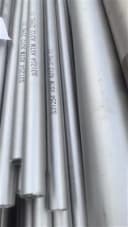
ASTM A182 F310H is a forged austenitic stainless steel material specifically designed for high-temperature service; it represents a high-carbon modification of 310 stainless steel. Compared to standard 310S (where carbon content is ≤0.08%), F310H features a controlled carbon content ranging from 0.04% to 0.10%, offering the following advantages at elevated temperatures:
Superior creep strength
Enhanced structural stability at high temperatures
Exceptional oxidation resistance (up to 1150°C)
Good weldability (no preheating required; solution annealing is recommended after welding)
It is widely utilized in high-temperature applications such as furnace components, heat treatment equipment, steam boilers, petroleum refinery tube supports, burners, and similar demanding environments.
Technical Specifications and Product Features
| Performance Indicators | Technical Parameters |
|---|---|
| Nominal Diameter | DN600 (24in) |
| Pressure Rating | Class 300 (PN50) |
| Flange Type | WN (Weld Neck ) |
| Sealing Face Type | RF |
| Wall Thickness Schedule | Sch40S |
| Material Grade | ASTM A182 Gr. F310H (UNS S31009) |
| Chromium Content | 24.0% - 26.0% |
| Nickel Content | 19.0% - 22.0% |
| Carbon Content | 0.04% - 0.10% |
| Tensile Strength | ≥515 MPa (75 ksi) |
| Yield Strength | ≥205 MPa (30 ksi) |
| Elongation | ≥30% |
| Maximum Service Temperature | Continuous Service: 1150°C / Intermittent Service: 1035°C |
High-Temperature Performance Advantages: F310H is a high-carbon variant of 310 stainless steel. By optimizing its carbon content (0.04–0.10%), it exhibits superior creep resistance and structural stability in high-temperature environments. Its 25% chromium–20% nickel austenitic microstructure endows it with exceptional resistance to oxidation, sulfidation, and carburization, making it particularly suitable for:
High-temperature steam pipelines in thermal power plants
Petrochemical cracking units
Heat treatment furnace tube systems
High-temperature reactor connections
Quality Assurance System:
The product undergoes comprehensive quality control throughout the entire process:
Raw Material Control: Spectroscopic analysis ensures compliance with Cr and Ni content standards, while carbon content is precisely controlled.
Forging Process: Hot forging ensures grain refinement.
Heat Treatment: Solution annealing (1050°C–1150°C followed by rapid cooling) optimizes corrosion resistance.
Non-Destructive Testing: 100% Ultrasonic Testing (UT) + Radiographic Testing (RT).
Dimensional Inspection: Coordinate Measuring Machine (CMM) inspection ensures compliance with B16.5 tolerance requirements.
Pressure Testing: Hydrostatic testing at 1.5 times the design pressure (approx. 7.5 MPa).
Surface Quality: RF sealing face features a serrated finish with a roughness of 125–250 AARH.
Third-Party Certification: EN 10204 3.2 Material Certificate.